Table of Contents
ToggleA well-stocked first aid kit is one of those things most people think about after they need it. The right kit – whether kept in a kitchen cabinet, under a classroom sink, or in an office break room – can stop a minor cut from turning into a bigger problem and buy critical time before medical help arrives. Stocking one properly does not require a medical degree; it just requires knowing what to put inside and why it matters.
Schools, workplaces, and homes face different daily risks, but the core need is the same: fast access to the right supplies for schools, offices, and households where accidents happen without warning.
Why Having the Right First Aid Kit Actually Matters
Most people assume emergencies are rare. They are – until they are not. A child scrapes a knee during art class. A coworker slices a finger on a cardboard box. Someone spills hot coffee. None of these is a dramatic event, but all of them require immediate attention.
A 2024 cross-sectional study published in BMC Public Health (PMC11234814) found that only 24.7% of surveyed households in Sichuan, China had a first aid kit at home, and that health literacy was one of the strongest predictors of whether families bothered to stock one at all. In other words, knowing why preparedness matters directly shapes whether people act on it.
The gap between “having something in the medicine cabinet” and having a genuinely useful kit is wider than most realize. The right supplies for schools, homes, and commercial spaces should be chosen deliberately – not assembled from whatever happens to be on a drugstore shelf.
What Goes Into a Home First Aid Kit Pack
The Non-Negotiables Every Kit Needs
A home kit does not need to resemble an emergency room. What it does need is coverage for the most likely scenarios: cuts, burns, sprains, allergic reactions, and sudden illness.
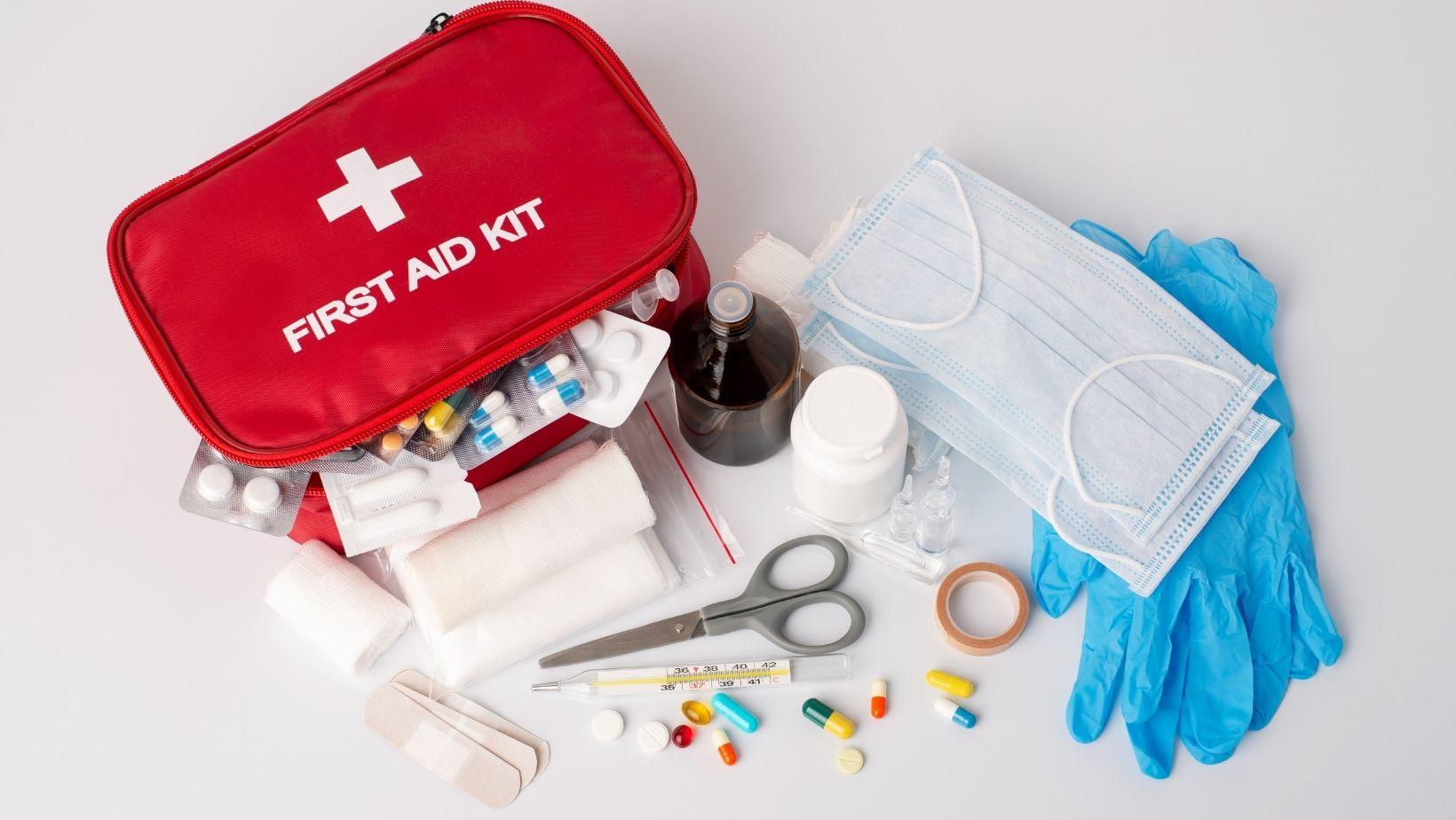
Here is a solid baseline for any home first aid kit pack:
- Adhesive bandages – multiple sizes, from small finger bandages to larger knuckle pads
- Sterile gauze pads and rolls – for wounds too large for a standard bandage
- Antiseptic wipes and antibiotic ointment – to clean and protect cuts from infection
- Medical-grade adhesive tape – holds dressings in place without skin irritation
- Instant cold packs – for sprains, swelling, and bumps
- Digital thermometer – a basic but often forgotten item
- Tweezers and scissors – for splinters, cutting tape, or trimming gauze
- Disposable gloves – at least two pairs, kept sealed
- Pain relievers – ibuprofen and acetaminophen for adults; age-appropriate options if children are in the household
- Emergency contact card – including poison control (1-800-222-1222 in the US) and the nearest urgent care facility
That list covers roughly 80% of everyday incidents. The other 20% depends on your household’s specific situation – whether anyone has allergies, takes prescription medications, or lives with a chronic condition.
Organizing the Kit So It Is Actually Useful
A kit that takes three minutes to dig through is a kit that fails in the moment. Store supplies in clearly labeled, zip-sealed compartments or separate pouches within the main case. Group items by function: wound care together, tools together, medications together.
Check the kit every six months. Bandages dry out, antiseptic wipes lose effectiveness, and cold packs can develop slow leaks. Mark expiration dates in a small notebook stored inside the lid – that five-second habit will save real frustration later.
Stocking a First Aid Kit for the Office or School
OSHA Requirements and What They Mean in Practice
Offices are not optional when it comes to first aid preparedness. OSHA’s 29 CFR 1910.151(b) requires that adequate first aid supplies be readily accessible for all employees. “Readily accessible” is not vague bureaucratic language – inspectors have known at times how long it takes a worker to actually reach the kit.
The ANSI/ISEA Z308.1-2021 standard, which OSHA references as its practical benchmark, breaks workplace kits into Class A (low-hazard environments like offices) and Class B (higher-risk settings like manufacturing floors). Most standard offices need a Class A kit minimum, but a multi-floor office or one with any physical work component should consider upgrading.
For schools specifically, the standard shifts slightly. Classrooms – particularly those running art and craft activities – introduce additional hazards: sharp tools, adhesives, chemical-based paints, and allergenic materials. Stocking art and craft supplies for schools alongside a dedicated safety kit in every classroom is a practice recommended by school safety coordinators and one that reduces the time between an incident and a response.
Supplies for Schools: Building Kits That Cover Classroom Risks
Schools represent a unique environment where dozens of children interact with materials, furniture, and each other all day long. A single kit near the front office is not enough. Every classroom – especially those that regularly use art supplies for schools, science materials, or physical equipment – should have its own kit within arm’s reach of the teacher. Sourcing everything from a single trusted vendor makes the process easier; browse supplies for school at JPro Supplies to see what institutional-grade options look like.
Here is what a school-specific first aid kit should add beyond the standard home baseline:
Ordering bulk art supplies for schools in quantity is standard practice – the same approach should apply to first aid restocking. Buying replacement supplies in volume reduces per-unit cost and makes it easier to maintain multiple kits across a building.
Home vs. Office First Aid Kit Comparison
|
Feature |
Home Kit |
Office/School Kit |
|
Recommended size |
Compact (travel or medium case) |
Medium to large case or wall-mounted cabinet |
|
Gloves required |
2 pairs minimum |
4–6 pairs minimum |
|
Eye wash included |
Optional |
Strongly recommended |
|
Medications included |
OTC pain relievers |
Per OSHA/district policy |
|
Inspection frequency |
Every 6 months |
Monthly |
|
Quantity of kits needed |
1–2 per home |
1 per floor or classroom |
|
Key added items |
Thermometer, cold packs |
Splints, burn gel, eye cups |
The differences are not dramatic, but they matter. A school kit that lacks an eye wash when a student gets clay dust in their eyes is a gap that could have been filled with less than five dollars of additional supplies.
Where to Buy Quality First Aid Supplies
Not all first aid supplies are equal. Generic kits from big-box stores often contain lower-grade bandages, non-sterile components, or missing items that make the kit look complete without actually being complete.
JPro Supplies carries a range of quality supplies designed for school and institutional use – the same setting where first aid access matters most. Whether stocking a single classroom or restocking an entire school building, buying from a supplier that specializes in institutional-grade materials makes a measurable difference in product quality and reliability.
For additional product-specific guidance, explore the JPro school supply catalog for bulk-friendly options that pair well with safety restocking orders. When buying art and craft supplies for schools in volume, it is worth checking whether the same supplier handles safety essentials – consolidating orders saves time and often unlocks better pricing.
Stock Up Before You Need It
Waiting until after an injury to think about a first aid kit is the most common and most avoidable mistake. The right kit – stocked thoughtfully, checked regularly, and positioned where people actually work and learn – is one of the simplest ways to turn a stressful moment into a manageable one.
Whether purchasing for a single classroom, a multi-floor office, or a busy household, JPro Supplies is a practical starting point. Their range of institutional-quality supplies makes it easy to bundle safety essentials alongside everyday supplies for schools – so nothing critical gets overlooked.
Frequently Asked Questions
Q: What are the most important items to have in a basic home first aid kit?
A: Adhesive bandages, sterile gauze, antiseptic wipes, antibiotic ointment, medical tape, disposable gloves, a cold pack, tweezers, scissors, a thermometer, and OTC pain relievers. Store an emergency contact card inside the lid.
Q: How often should a first aid kit be restocked or checked?
A: Home kits every six months; office and school kits monthly. Replace anything used, expired, or damaged immediately – do not wait for the next scheduled check.
Q: What should be included in a first aid kit specifically for classrooms?
A: Everything in a standard kit, plus eye wash solution, latex-free gloves, burn gel packets, non-adhesive dressings, and a SAM splint. Allergy protocols for students with known severe reactions should be coordinated separately with the school administration.
Q: Is it better to buy a pre-assembled first aid kit or build one from scratch?
A: Pre-assembled kits from reputable suppliers are faster and less likely to miss essentials; custom-built kits allow better tailoring to specific household or classroom needs. Either approach works if the contents meet ANSI/ISEA Z308.1 minimums.
Q: How should a first aid kit be stored to keep it effective?
A: Keep it in a cool, dry spot away from direct sunlight – not a car trunk or bathroom cabinet. Make sure everyone in the space knows exactly where it is.