Table of Contents
ToggleThe Splurge Economy vs. The Everyday Fan
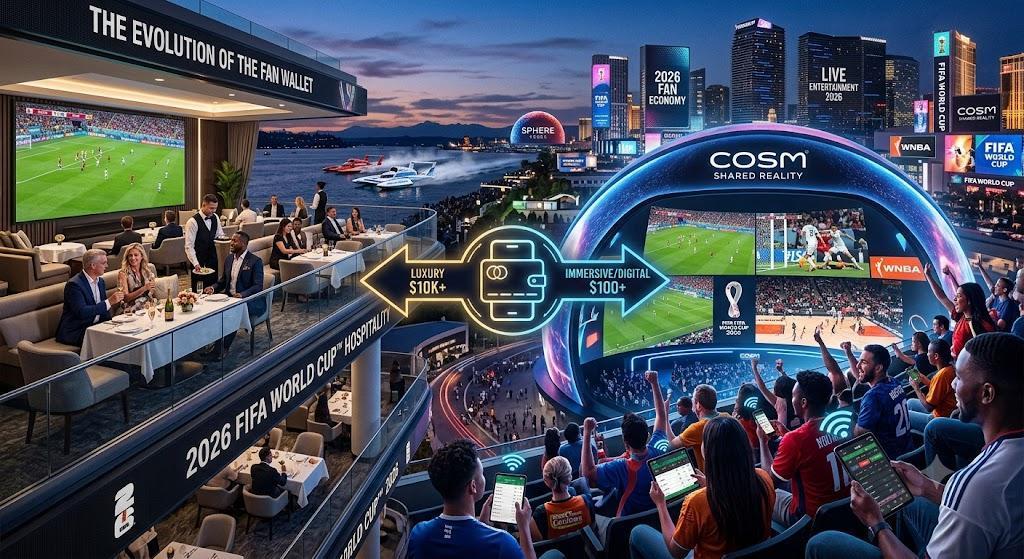
Let’s be real for a second about the 2026 entertainment market. We are watching a $3.5 trillion global machine slowly bifurcate the American consumer base into two distinct economic realities. A professional game used to be a habitual, middle-class Tuesday night activity. The reality today is much colder. Market research from early 2026 paints a brutal picture; a full 86 percent of fans now view live sports strictly as a luxury asset. Fans are no longer evaluating a baseline ticket price. The modern consumer has to calculate a full-evening financial siege. You have food and beverage markups, surging parking fees, and those ubiquitous hidden service charges dictating the final call. This baseline cost climbed so high that fandom now demands extreme, calculated sacrifice. Some diehards literally pick up side hustles or raid emergency savings just to afford entry. A staggering 39 percent of these people would rather dump their money into a single major sporting event than take a traditional vacation. This is the “splurge” model in full effect.
The $143,000 Seat and The Mega-Event Mirage
Look closer at the 2026 FIFA World Cup for the ultimate stress test of this premiumization strategy. Consumer intent is absolutely massive right now. Roughly 75 percent of American adults plan to follow the tournament, which marks a historic high driven heavily by younger demographics. The catch? Supply and demand mechanics completely shattered accessibility. Only about 14 percent of those fans actually plan to buy tickets. Category 1 resale prices for the final have scraped a dizzying $143,750 per seat. Everyday supporters are effectively locked out. Forget the old days of corporate suits grazing on lukewarm buffet food in a quiet box. The game completely shifted once ultra-rich buyers started throwing down $45,000 per head for curated travel routes—we are talking private jets, fixers on call 24/7, and actual face time with the players. Regional economies absolutely gorge on this influx of international wealth. Boston’s hospitality sector saw Revenue Per Available Room spike 28 percent on match days alone. The local fan effectively watches their own city’s stadiums turn into gated communities.
The True Venture Capital Darling is Wearing Cleats
Ignore the saturated men’s leagues for a minute if you want to track where the smartest new capital flows today. The WNBA and the National Women’s Soccer League serve as the most explosive frontiers for franchise valuation growth. We permanently moved past the era of treating women’s sports as a subsidized charity cause. The Golden State Valkyries hurtle toward becoming the first billion-dollar franchise in women’s sports history before they even establish a multi-year legacy. Over in the NWSL, the average franchise sits at $184 million, while Angel City FC commands a cool $335 million. These massive valuation jumps rely heavily on an influx of media rights capital, which radically restructures the labor market. The new collective bargaining agreement obliterated the old ceiling to unlock $1.4 million max payouts. Nobody has to fly to some obscure overseas league in November just to make rent anymore. These stars lock in right here at home to scale their personal empires, which naturally fed right into that insane 360 percent ticket demand spike right after Paris.
Domes, Data, and The Illusion of Access
Traditional concrete cathedrals alienated the median fan long ago. A technological middle ground stepped up to capture that overflow demand, turning physical venues into proprietary media formats. Companies like Cosm drop 8K LED “Shared Reality” domes into places like Dallas and Atlanta. This bridge connects a living room broadcast to a $10,000 courtside seat. Fans fork over $17 to $100 to sit in a hyper-immersive environment that mimics the stadium atmosphere minus the luxury tax. Messing with the actual playing surface is a completely different animal, though. Look at what happened at the Big 12 Men’s Basketball Tournament earlier this year. The league tried debuting a fully programmable 4K LED glass court to maximize broadcast sponsor inventory. The whole thing fell apart almost instantly. Guys could barely look at the floor without getting severe vertigo. Traction failed miserably, and after a Texas Tech player suffered a groin injury slipping on the glass, the commissioner frantically reverted to traditional hardwood. Broadcasters desperately crave the monetization of smart surfaces, but the physical reality of the sport will always violently reject technology that compromises athletic safety.
The Frictionless Operator and the At-Home Trap
Behind the scenes, artificial intelligence quietly dictates every dollar spent inside and outside the arena. Fastbreak AI and Recentive Analytics do not just write schedules anymore; these platforms operate as precise financial instruments. These algorithms chew through local economic shifts, random traffic jams, and weather models to spit out the perfect, maximum-yield television schedule. Step into the actual concourse, and the invisible hand is just as heavy. Venues carve out private 5G lanes specifically for their own cash registers so your beer transaction never fails—even when eighty thousand people are trying to text at the same time. You eliminate the wait time, and per-capita concession revenue reliably jumps. This frictionless digital ecosystem extends straight into the living room to ruthlessly target the priced-out consumer. Franchises actively blur the lines between physical attendance and digital immersion to extract discretionary income from afar. The aggressive integration of live online casinos, micro-betting apps, and interactive alternate broadcasts operates as a calculated, high-speed revenue trap. The gaming and online betting sectors expect to clear $119.7 billion by 2030 by bleeding this exact demographic dry.
2,650-Horsepower Thunderboats and The Brutal Local Reality
Step outside the hyper-commercialized stadium bubble to find regional traditions fighting a vicious war for survival. Summer festivals anchored by H1 Unlimited hydroplanes—like Seattle’s Seafair—operate as massive community economic drivers. Fans line the shores to watch 200-mph thunderboats tear up the water. The financial mechanics of keeping these specific teams afloat, however, are an absolute bloodbath. An owner running a competitive squad guarantees a massive six-figure deficit the second the boat touches the water. A single racing propeller costs $15,000 and might disintegrate after a few hours of use. Owners bleed cash endlessly, forced to beg heavy corporate sponsors just to plug the hemorrhagic drain. Consumers who refuse to play the luxury sports game retreat into these community festivals or heavily invest in personal experiential water sports. They drop $600 on premium drop-stitch kayaks and fishing paddleboards to merge their fandom with active lifestyle participation. Massive stadium tours by artists like Post Malone aggressively cannibalize whatever is left of the traditional sports ticket budget. The definition of a sports fan in 2026 is almost unrecognizable. The properties that actually survive the next decade will seamlessly blend elite, curated luxury for the one percent while utilizing digital infrastructure to keep the everyday fan bleeding just enough discretionary income to stay permanently hooked.