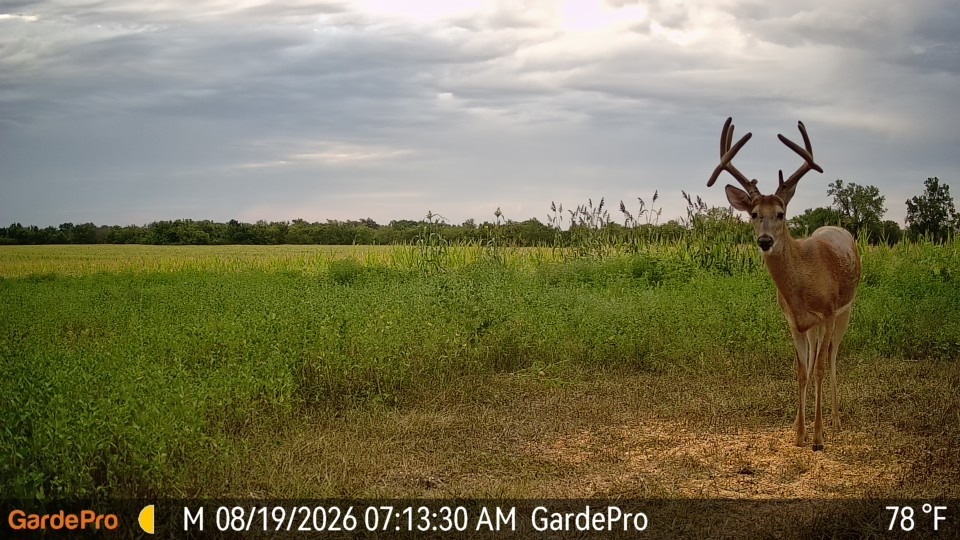
Camping puts you in places where wildlife is already active. You may notice tracks near the edge of a campsite, hear movement outside after dark, or wake up wondering what passed through while everyone was asleep. Sometimes the goal is simply curiosity: was that rustling caused by a deer, raccoon, fox, or something else?
The challenge is that getting a closer look can easily become part of the disturbance. Walking toward an animal, shining a bright flashlight into the woods, or repeatedly checking the same area may change the behavior you were hoping to observe in the first place.
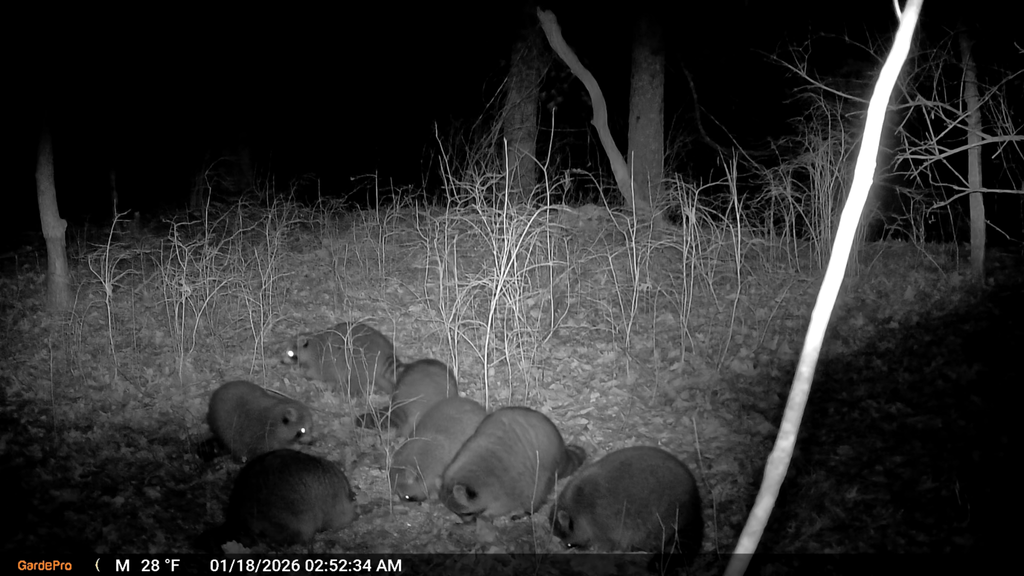
A better approach is passive wildlife observation. Instead of trying to follow animals, you let the camera remain in place and record activity when wildlife naturally passes through. Trail cameras are particularly well suited to this type of monitoring because they can operate outdoors on battery power, respond to motion, record at night, and continue working even at campsites where electricity or internet access is unavailable.
Why Wildlife Shows Up Around Campsites
You do not have to plan a wildlife-watching trip to encounter animals while camping. Campsites are often surrounded by the same woods, shorelines, grasslands, and travel corridors animals already use.
Some wildlife may simply be moving through the area on a normal route. Others may pass nearby because of water, vegetation, or natural food sources. Unfortunately, food scraps and unsecured trash can also attract animals, which is why responsible camping means storing food properly and never intentionally feeding wildlife.
That distinction matters when using a camera. The goal should be to observe animals that are naturally using the landscape, not to bring them closer for better photos.
If an animal changes direction, stops feeding, becomes alert, or otherwise reacts to your presence, you may already be too close. Watching from a distance gives you a better chance of seeing natural behavior while also reducing unnecessary risk.
Why a Trail Camera Fits This Type of Wildlife Observation
A regular camera or smartphone works well when an animal happens to appear while you are awake. The problem is that wildlife does not operate according to your camping schedule.
Many animals move during the evening, overnight, or early morning. Sitting outside waiting for them is usually impractical, and repeatedly walking through nearby vegetation to look for wildlife can defeat the purpose of low-impact observation.
A trail camera works differently. It can remain in one location and wait for movement rather than requiring someone to actively watch the area.
Because trail cameras are battery powered, they do not need to be plugged into the campsite’s electrical system. They are also designed for outdoor deployment, so they can be placed on a suitable tree, post, or other secure location without running power cables through camp.
Motion-triggered recording is another advantage. Instead of continuously filming an empty trail for hours, the camera remains ready and records when its sensor detects activity. That makes it practical for observing what happens around the campsite while you are sleeping, hiking, cooking, or simply doing something else.
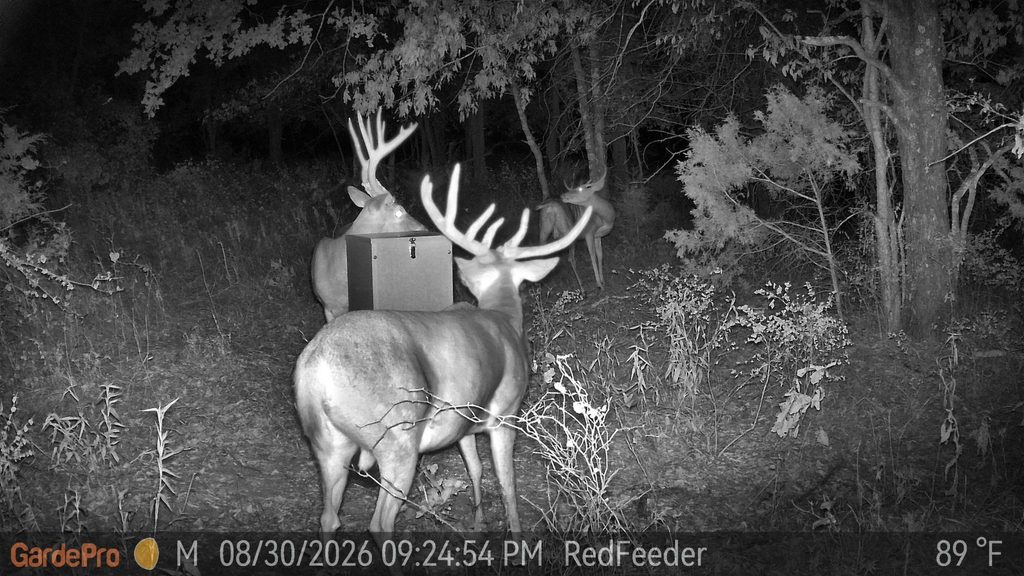
At night, a no-glow infrared trail camera can record without using the visible white light that a conventional spotlight would produce. That does not make the camera completely invisible to every animal, nor does it mean placement no longer matters, but it removes the need to illuminate wildlife with a bright visible flash.
You Do Not Necessarily Need Electricity—or Internet
This is one of the more useful differences between trail cameras and many conventional outdoor security cameras.
A basic trail camera can record photographs and videos directly to an SD card. In that setup, it does not need campground WiFi, mobile data, or an internet connection at all. You leave it in place, then review the recordings later.
Some WiFi trail cameras add another option. Instead of connecting to campground WiFi or a home router, the camera creates a local wireless connection that a nearby phone can join.
The important distinction is that WiFi does not always mean internet.
With a local WiFi trail camera, your phone communicates directly with the camera while you are nearby. Depending on the model, that can allow you to review recordings, adjust settings, or use a live-view function without relying on 4G, 5G, or campground internet.
This is still a local connection, however. It does not mean the camera can be viewed from anywhere. Your phone must remain within the camera’s usable wireless range, and trees, terrain, vehicles, and other obstacles can reduce that range.
For a campsite, that may be perfectly adequate. If your goal is to check a camera positioned at the edge of camp without repeatedly walking over to it, local access can be more useful than true long-distance remote monitoring.
Where to Put a Trail Camera Around a Campsite
The best location is usually not directly beside your tent.
Instead, think about where animals can move naturally without being drawn into the part of camp occupied by people. The edge of a clearing, an existing travel corridor, or a transition between open ground and vegetation can provide a useful view while keeping the camera away from the busiest part of the campsite.
Avoid placing cameras near nests, dens, young animals, or other sensitive areas. A camera is meant to reduce the need to approach wildlife, not create a reason to enter places where animals are resting or raising young.
Camera angle matters as well. Rather than pointing directly down a long trail, positioning the camera so animals are more likely to move across its detection area can give the sensor more opportunity to trigger while the animal is still in the frame.
Before leaving the camera overnight, check the view once during daylight. Remove only obvious obstructions that can be moved without altering the site, and avoid cutting vegetation simply to create a better photograph.
When Local WiFi Makes Campsite Monitoring Easier
For campers who want to review wildlife activity without repeatedly returning to the camera, a longer-range local WiFi model can make the setup more convenient.
The GardePro E8 2.0 Pro is one example. It uses dual antennas and is rated for a local WiFi connection of up to 165 feet in open, unobstructed conditions. It also uses a built-in rechargeable battery, so it does not require a power outlet at the campsite, and supports local Live View when the phone remains within usable wireless range.
The practical advantage is flexibility rather than the number itself. A longer rated connection gives you more options for placing the camera away from the busiest part of camp while still potentially accessing it from nearby.
Real-world range can be shorter than the advertised maximum. Trees, dense vegetation, terrain, vehicles, and the position of your phone can all affect wireless performance. It is worth testing the connection from the place where you actually expect to use your phone rather than assuming the maximum open-field distance will apply everywhere.
And if you do not need to check the camera from your phone at all, there is nothing wrong with using it as a traditional offline trail camera and reviewing the SD card later.
Observe Wildlife Without Encouraging It to Visit Camp
A trail camera can help you discover what moves around a campsite after dark, but it should not change how you manage the campsite itself.
Do not leave food outside to improve the odds of capturing wildlife. Keep food, trash, toiletries, and other scented items stored according to local campground or park requirements. Wildlife that begins associating campsites with food can change its natural behavior and create safety problems for both animals and future campers.
The same principle applies when an interesting animal appears on camera. Resist the temptation to walk toward the location immediately or reposition the camera closer to the animal.
The most interesting footage often comes precisely because nobody is standing there.
A camera left quietly in an appropriate location can show animals moving on their own schedule—something that is difficult to observe when people are actively searching for them.
Know the Limits Before You Set One Up
Rules for cameras, wildlife observation, and attaching equipment to trees or structures vary between campgrounds, parks, public lands, and private properties. Check the rules for the specific place where you are staying before installing any equipment.
Wildlife regulations matter as well. Parks may have required viewing distances for certain species, especially large mammals and predators. A camera should never be used as justification for approaching an animal more closely.
It is also worth remembering that trail cameras are observation tools, not wildlife detectors that identify every sound or movement perfectly. Wind-blown vegetation, changing temperatures, people, and other activities can all produce recordings.
Treat what the camera captures as another way to learn about the environment around you, not as an excuse to interact with every animal that appears.
Let the Wildlife Come to the Camera
One of the easiest ways to observe wildlife responsibly while camping is to stop trying so hard to see it.
Set up camp carefully, store food correctly, keep your distance, and let animals continue using the landscape on their own terms. A trail camera can quietly fill in the hours you cannot observe yourself, showing what passed through after sunset or before everyone woke up.
For campsites without electricity or reliable internet, that simplicity is part of the appeal. A battery-powered camera can continue recording locally, while a local WiFi model can add nearby phone access without requiring campground WiFi or cellular service.
The goal is not to turn the campsite into a surveillance zone. It is to create a small window into the wildlife activity already happening around you—while giving the animals enough space to behave naturally.