Table of Contents
ToggleWhat Gulf Anglers Should Check Before Heading Out begins with one clear fact: preparation prevents danger and missed fish. In the Gulf, weather shifts fast, regulations vary by zone, and a small equipment failure becomes a long, costly problem offshore. This checklist focuses on immediate, practical checks, legal permits, forecasted seas, boat systems, safety gear, and supplies, so they leave the dock confident, legal, and ready to catch fish in 2026.
Key Takeaways
- Gulf anglers must secure the correct licenses and follow local fishing regulations to avoid fines and ensure legal outings.
- Checking the NOAA marine forecast and tide tables before departure helps anglers avoid hazardous conditions and optimize fishing success.
- Conduct a thorough pre-trip inspection of the boat, engine, fuel, and bilge systems to prevent breakdowns offshore.
- Ensure all safety gear, including USCG-approved life jackets, flares, and functional communication devices, are onboard and in good condition.
- Prepare bait, tackle, and provisions tailored to target species and trip length to maximize catch and maintain fish quality.
- Carry ample water, sun protection, and necessary medication to stay hydrated and safe during long fishing trips.
Plan Your Trip, Permits, And Local Regulations
Fact first: anglers must hold the correct license and follow local rules before fishing in Gulf waters. They should confirm state saltwater fishing licenses and any federal endorsements for reef or offshore species. A missed permit can mean heavy fines and confiscated catch.
Practical steps: check the target species’ bag and size limits and seasonal closures for the exact county or zone of harvest. Many fisheries publish zone maps and regulations online: anglers should bookmark local enforcement pages and recent rule updates. File a float plan with departure and return times, vessel description, and fishing area: leaving a printed copy with a trusted person reduces search time in emergencies.
Useful internal resources: when choosing gear and planning a legal outing, anglers often consult the site’s practical guides to fishing gear basics and the wider hub on Gulf crafts and outdoor living at this overview. These pages help anglers align equipment choices and permit needs with expected catches.
Check Weather, Marine Forecasts, Tides, And Water Conditions
Immediate insight: the NOAA marine forecast and tide tables determine whether a planned zone is safe and fishable. Gulf winds, squalls, and tides change on short notice: wind direction and wave height directly affect boat handling and bait presentation.
What to do: read the NOAA marine forecast for the specific gulf zone, including wind speed, wave height, and small craft advisories. Monitor radar and lightning forecasts for convective storms, especially during summer when storms form quickly. Verify tide tables and currents for nearby passes, inlets, and structure: an outgoing tide through a pass can speed transit and make certain reefs productive.
Tools and timing: anglers should check forecasts the evening before and again 90 minutes before departure. Portable VHF weather alerts and an app that shows live radar reduce surprises. For decision support, consult the site’s regional fishing guides like the Gulf Shores guide to match local conditions with seasonal expectations.
Inspect The Boat, Engine, Fuel, And Bilge Systems
Clear fact: a pre-departure mechanical check prevents the majority of offshore breakdowns. A failed fuel pump or clogged through-hull is often obvious on a quick inspection but catastrophic if missed.
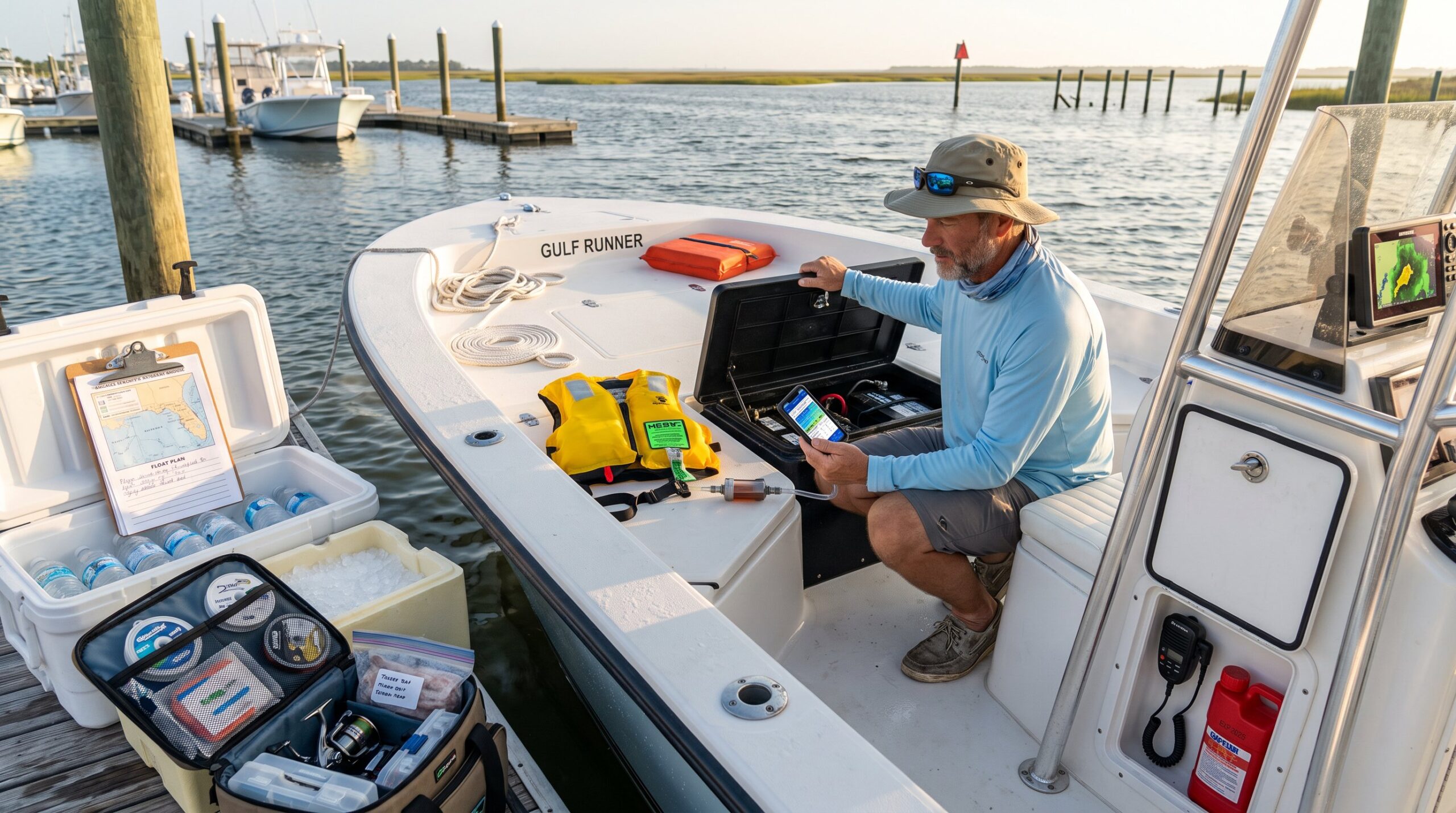
Walkthrough checklist: inspect the hull for visible damage, test rails and non-skid, and verify scuppers and drains are clear. Check engine oil level, coolant, belts, hoses, fuel filters, and water separators. Confirm there is enough fuel plus a 30% reserve for offshore trips: calculate consumption with planned speed and distance, not optimistic estimates.
Bilge and electrical: test bilge pumps in both auto and manual modes and verify battery charge and breaker condition for navigation and pumps. Check seacocks and through-hulls for leaks and secure clamps. For detailed equipment matches and sizing, consult the site’s practical gear articles such as the complete equipment guide which helps anglers pair boat systems to target fishing styles.
Honest lesson: one captain reported leaving with a full tank but a clogged fuel filter: the engine ran fine inshore but died two hours offshore. A five‑minute filter check would have avoided a long tow and lost day.
Verify Safety Gear, Personal Flotation Devices, And Fire/SOS Equipment
Key point: life jackets and functional SOS devices save lives, and are required. Every person on board must have a USCG‑approved PFD: inflatables and belts must be inspected for leaks and proper inflation.
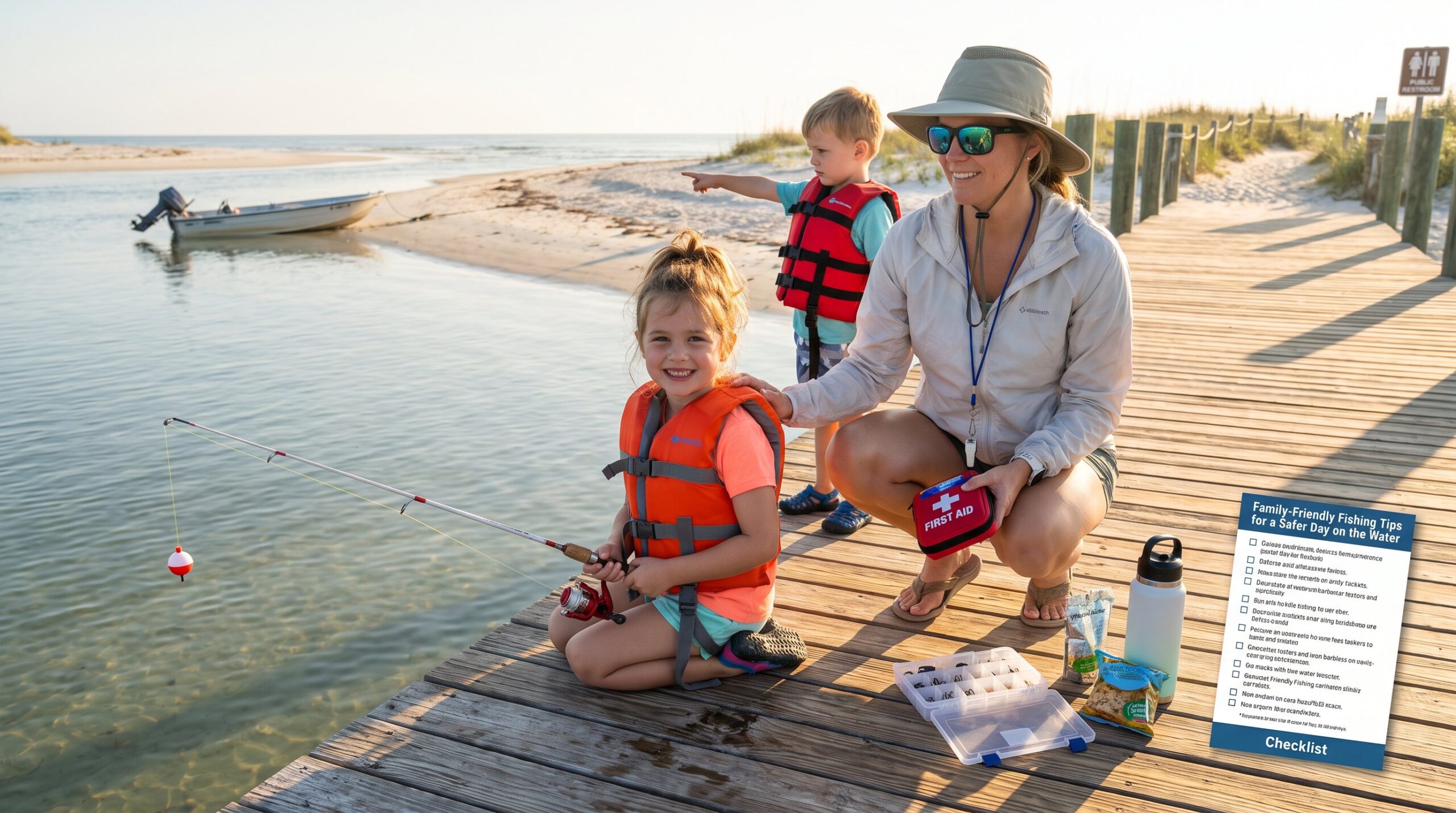
Checklist items: verify a Type IV throwable is accessible, flares are in date, fire extinguishers are charged, and sound signals (horn or whistle) work. Confirm navigation lights and a VHF radio that can reach channel 16. Carry a first-aid kit and emergency drinking water in a dry container. A personal locator beacon or EPIRB adds a layer of rescue certainty when fishing offshore.
Practical link: anglers looking to match safety gear to boat size can use the site’s safety-focused resources like the navigational gear guide which pairs equipment with common Gulf scenarios.
Warning from experience: inflatable life jackets that haven’t been serviced may not inflate when needed. Inspect the status indicator and replace CO2 cartridges per the manufacturer schedule.
Stock Bait, Tackle, And Onboard Provisions
Direct answer: match bait, tackle, and provisions to the expected species, depth, and trip duration before leaving the dock. Running out of appropriate leaders, hooks, or live bait ruins productive windows.
Tackle checklist: verify rods, reels, leaders, hooks, and terminal tackle are suitable for target Gulf species and fishing depth. Inspect drag systems, retie any frayed leaders, and carry spare reels or a basic repair kit. For trip-specific advice, the site’s tackle selection article explains rigs and sizes for common catches in the Gulf.
Bait storage and fish care: store live bait in aerated buckets or a livewell with shaded, well-oxygenated seawater: change water or add oxygen tablets on long trips. For dead bait, use brine or frozen storage and avoid freshwater contact when thawing to preserve scent and texture. Carry coolers with ice or insulated fish boxes to keep the catch cold and meet sale or transport rules.
Practical anchor: when anglers prepare bait and tackle, pairing those choices with the site’s tackle primer like how to choose tackle leads to fewer lost hookups and faster fish care.
Bait Storage And Fish Care
Top fact: proper bait storage and immediate fish care preserve catch quality and reduce waste. A bad thawed bait or warm fish box spoils a day.
Specific actions: for live bait, maintain aeration and shade: oxygen injection helps on hot days. For frozen or dead bait, use brining or vacuum sealing and thaw in seawater, never freshwater, to retain scent. Onboard, ice the catch immediately in a well-drained cooler: remove guts quickly for larger fish to prevent spoilage.
Example: a six-person trip kept fish on ice within ten minutes of landing and preserved fillet quality for 48 hours, compared with a day‑trip that let fish warm on deck and lost texture by evening.
Food, Water, Medication, And Sun Protection
Core fact: dehydration and sun exposure are the quiet trip-enders. Pack more potable water than estimated and protect skin to stay effective on the water.
Checklist: bring at least one gallon of water per person for a full day, plus electrolyte drinks for hot months. Pack nonperishable food, seasickness medication, and prescription drugs in a waterproof container. For sun protection, use high-SPF sunscreen, a wide-brim hat, polarized sunglasses, and UV-rated clothing.
Personal note: captains report that replacing one soft cooler with a dedicated water chest reduced midday fatigue and improved crew focus on fish. Small investments in shade and hydration increase safe fishing time.