Table of Contents
ToggleFamily-Friendly Fishing starts with simple planning that keeps kids safe and makes the day enjoyable. This guide shows clear, practical steps families can use before and during an outing: checklists, location choices, kid-sized gear, on-the-water rules, and basic first-aid actions. The advice is concrete, third-person, and based on up-to-date safety practices so parents, caregivers, and group leaders can relax a little while keeping control of real risks.
Key Takeaways
- Family-friendly fishing requires thorough preparation, including life jackets, a stocked first-aid kit, sun protection, hydration, and a charged phone to ensure safety on the water.
- Choosing accessible locations with gentle shorelines, nearby restrooms, and calm water reduces risks and enhances the experience for kids and families.
- Use child-sized fishing gear such as light-action rods and barbless hooks to minimize frustration and prevent injuries.
- Set clear, simple on-the-water rules and designate a dedicated adult as a ‘water watcher’ to maintain constant supervision and prevent accidents.
- Practice basic emergency drills with children, including calling for help and staying calm if they slip, to foster quick and safe responses.
- Small habits like pre-fitting life jackets and organizing gear before the outing help keep family fishing trips safe, smooth, and memorable.
Essential Safety Checklist Before You Go
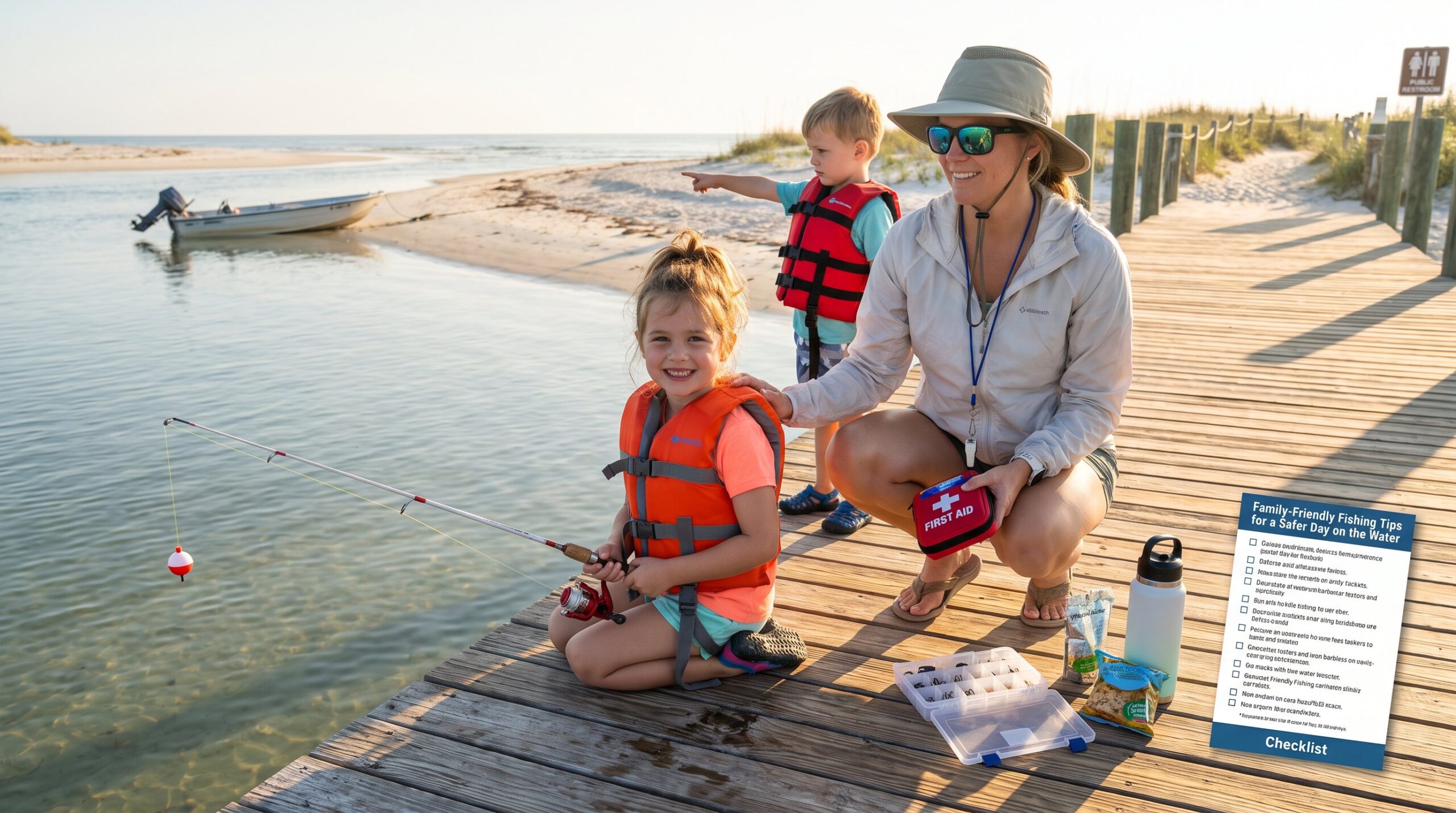
Essential item list: life jackets for every child, a stocked first-aid kit, sun protection, hydration, and a charged phone. Life jackets must fit snugly: test the fit on land and confirm straps are secured. The first-aid kit should include bandages, antiseptic, tweezers, scissors, analgesic cream, aspirin, sunscreen (SPF 30+), and insect repellent. For packing specifics, parents often consult a practical beach list when preparing supplies and snacks.
Why these items matter: a properly fitted jacket prevents a toddler from slipping below waves: tweezers speed hook removal: sunscreen reduces severe burns that often end outings early. Pack water in insulated bottles and portion snacks into small zip pouches, this slows spills and limits sugar meltdowns.
Concrete preparation step: lay out every child’s clothing and jacket the night before, then run a short wear test so children accept the jacket before the water. This prevents late-morning resistance and keeps the group on schedule.
Helpful resource: families who want a broader planning foundation can reference a complete guide for related Gulf Coast outdoor preparations.
Choosing Family-Friendly Locations, Timing, And Conditions
Best fact first: choose accessible spots with gentle shorelines, restrooms nearby, and calm water. Those features cut fall risk and reduce stress when a child needs a break.
Timing matters: early morning or late afternoon avoids midday heat and lowers sunburn risk. Mornings often produce calmer water and better bite windows, so the family sees fish faster and stays engaged. Avoid windy days with whitecaps, which raise casting hazards and cold exposure.
How to pick a site: scout locations online or drive there during a low-traffic hour to note parking, restroom access, shade options, and terrain hazards like algae-covered rocks. For Gulf Coast trips, consider sites that offer short walks from car to shore: shorter approaches mean fewer tears and less dropped gear.
Local tip: if planning a larger outing, consult the site’s parking and rules pages or a nearby community calendar to avoid competing events that crowd the pier. Families who prefer crafts between casts may also plan short craft breaks using simple coastal supplies from nearby sources like the coastal craft ideas page.
Gear, Clothing, And Kid-Friendly Tackle
Key point first: use child-sized rods, barbless hooks, and secure storage. Proper gear reduces frustration and injuries.
Rod and reel: match a child’s height and strength to a light-action rod and small spinning reel. A seven-foot adult rod is awkward for small hands: a 5–6 foot rod often fits better. For bait, use small hooks (#8–#6) and add float stops so kids catch fish without constant casting practice.
Hook safety and storage: prefer barbless hooks or manually crimp barbs down to lower removal damage. Keep all hooks, knives, and sharp pliers in lockable tackle boxes or zip bags out of reach. Adults should handle terminal tackle changes.
Clothing and footwear: closed-toe shoes with grip prevent slips on wet docks. Layering is essential: a thin synthetic base layer, light insulating mid-layer, and a windproof top work for most Gulf Coast days. Wide-brim hats and polarized sunglasses protect eyes and cut glare, which helps kids spot bobbers.
Practical product references: families preparing gear can cross-check their kit with a short shopping and prep list on the site’s get ready page. For introducing children to tackle choices, the fishing gear for kids article explains rod sizes and colors that genuinely entice young anglers.
On-The-Water Rules, Boat And Pier Etiquette, And Emergency Prep
Clear rule first: set firm, simple rules, no running, keep weight centered on piers or boats, and never lean over edges. Rules that are short and repeatable stick with kids.
Supervision and roles: assign a dedicated adult as the “water watcher” with no phone duty. That adult remains within arm’s reach of toddlers and scans the group every two minutes. When adults rotate, state the handoff aloud so kids sense continuous supervision.
Emergency gear and preparedness: always have a throwable flotation cushion, whistle, spare life jacket, and a charged phone in a waterproof case. Know the local emergency numbers and nearest boat ramp or marina for quick pickup. Keep a written list of allergies and medical needs for every child.
Behavior expectations: teach children to call out a single, practiced word, “Help.”, and to freeze if they slip. Practice a simple drill on land: simulate a fall and show how to stay calm until an adult reaches them.
Related reading: for family-focused event planning and safety ideas, the site’s family fishing guide offers community-tested checklists and activity suggestions.
Conclusion
Family‑friendly fishing becomes safer when adults choose the right site, pack the correct gear, set clear rules, and rehearse simple emergency steps. Small habits, testing life jackets the night before, assigning a water watcher, and using barbless hooks, turn a risky day into a confident family memory. For related Gulf Coast planning, the site provides event and gear resources families often use.