Table of Contents
ToggleInshore Gulf fishing starts with reading water rather than relying on luck. Inshore Gulf Fishing puts anglers into shallow grass flats, oyster bars, mangrove edges and creek mouths where redfish, trout, snook, and flounder feed. This guide gives clear, actionable steps: where to fish, the right tackle, proven techniques for each species, and safety plus regulation basics. It is written for people who want practical next-day improvements, not vague theory. The first cast often teaches more than a week of reading, so plan a short trip, expect mistakes, and learn from each tide.
Key Takeaways
- Inshore Gulf fishing is most productive where shallow water, structure, and current converge, such as grass flats and oyster bars.
- Using a 7–7’6″ medium-light spinning rod with 15–20 lb braid and a fluorocarbon leader optimizes tackle performance for inshore species.
- Target redfish, trout, snook, and flounder with species-specific techniques and baits like live shrimp, soft plastics, and weedless spoons for better catch rates.
- Plan fishing trips around tides, focusing on the two hours before low tide through one hour after low for active feeding.
- Always follow local regulations, carry proper licenses, prioritize safety gear, and practice responsible catch-and-release for conservation.
- Consistent learning through short, focused trips and proper gear use leads to steady improvement in inshore Gulf fishing.
Where To Fish: Understanding Inshore Gulf Zones, Tides, And Local Hotspots
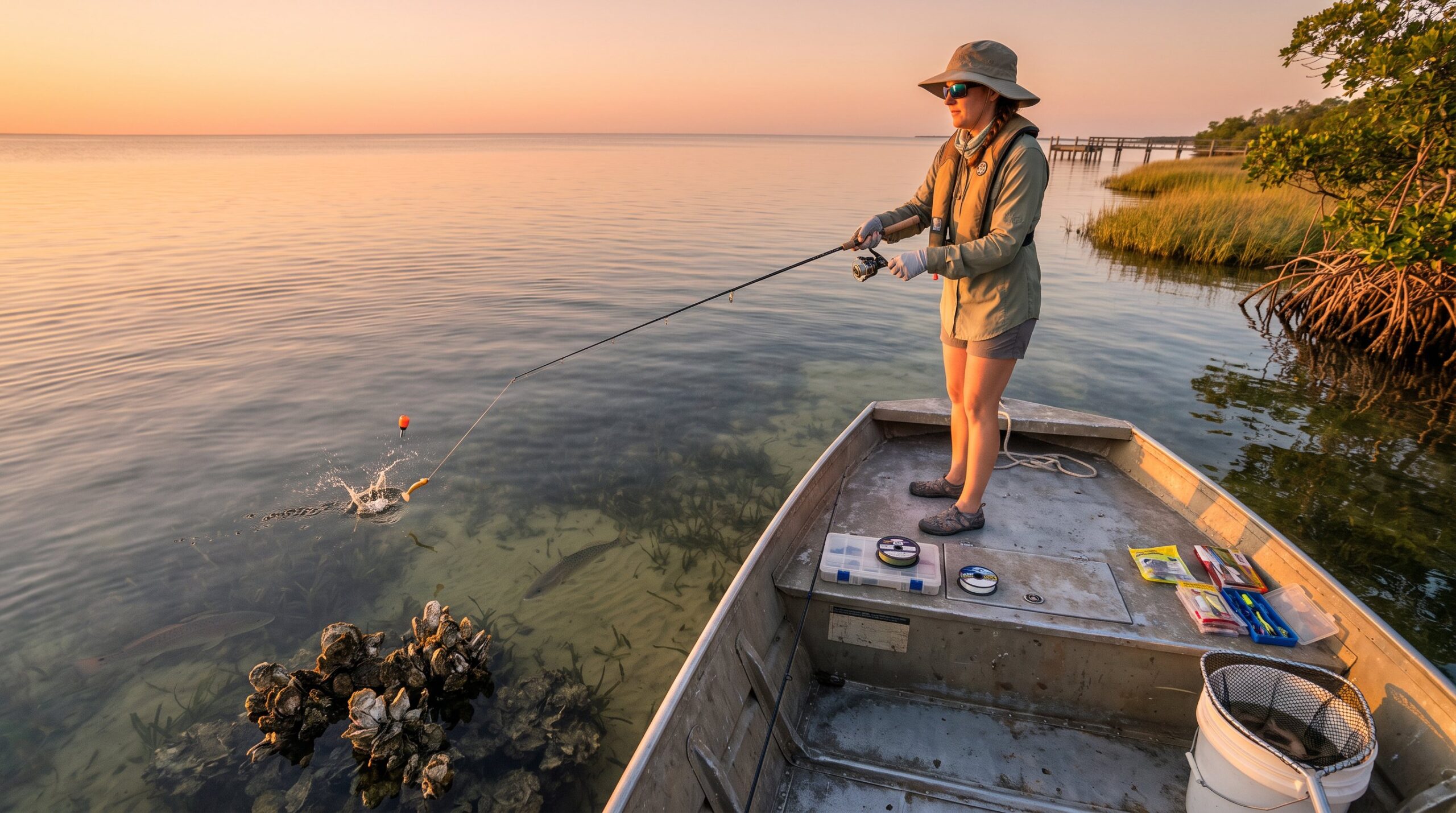
Fact first: the best inshore bites happen where shallow water, structure, and current meet. Anglers should look for grass flats (1–5 ft), oyster bars, marsh edges, mangrove shorelines, creek mouths, channel edges, and docks or jetties. Those specific places concentrate bait and create feeding lanes.
Tide timing matters. Fish move on falling and rising tides. Target the two hours before low through one hour after low for the most active feeding near drains and creek mouths. Conversely, strong incoming tides push bait into shallow flats where trout and redfish feed. A simple rule: position where current accelerates or funnels, channel cuts and pilings are prime.
Local hotspot example: a 200-yard marsh channel that narrows to 20 feet will push shrimp and small baitfish along the edge: anglers who cast ahead of the seam see consistent hookups. For snook, focus tight to mangroves, bridge pilings, and passes with current. Flounder favor sandy or muddy creek mouths and channel edges where they lie in wait.
Practical tip: spend 15 minutes scouting from shore or boat before fishing. If visible baitfish are fleeing a structure, fish are likely nearby. For more equipment and local context, consult a short site overview that ties into Gulf resources for beginners: site overview.
Essential Gear And Tackle: Rods, Reels, Lines, Rigs, And Bait For Inshore Waters
Fact first: the right basic rig dramatically raises catch rates. For most inshore trips a 7–7’6″ medium-light to medium spinning rod paired with a 2500–3000 size reel is recommended. That combo balances casting distance with the sensitivity needed on shallow flats.
Line setup should use 15–20 lb braid as main line with a 20–30 lb fluorocarbon leader of 12–24 inches. This combination gives low stretch for hooksets and a low-visibility leader near wary fish. Terminal tackle: hooks from size 1 to 4/0 cover common baits: carry 1–2 oz egg sinkers and a few popping corks for presenting live shrimp.
Lures to pack: gold weedless spoons for redfish, soft-plastic paddle tails on 1/8–1/4 oz jigheads for trout and flounder, topwater plugs for low-light topwater trout action, and suspending jerkbaits for midwater trout. Beginners often overbuy gear: instead, start with a focused kit and add specialty items as species patterns demand. Two relevant guides that help choose and prepare gear are available for new anglers: a guide to choosing tackle and a basic gear list, both help streamline purchase decisions without cluttering the boat. See concise guidance on choosing tackle and a primer on basic gear to match this setup.
Techniques And Bait: Proven Methods For Targeting Redfish, Trout, Snook, And Flounder
Fact first: each species has a predictable zone and a repeatable presentation that triggers strikes. Use live shrimp and crabs for redfish and snook, soft plastics for trout and flounder, and match presentation speed to water and tide.
Redfish: fish shallow marsh edges, oyster bars, and dock pilings on a moving tide. Cast a gold weedless spoon or a soft plastic near structure. For live bait, rig shrimp under a popping cork and allow bait to suspend at mid-depth. When the cork pops repeatedly, expect a quick thump. Many beginners set too early: wait a half-second after the first hard pull before setting the hook.
Trout: work grass flats in 2–5 ft and sand–grass transitions. A soft plastic under a popping cork works well: pop twice, allow the lure to sink 3–5 seconds, then repeat. Suspended jerkbaits are effective when trout hold mid-column over deep grass.
Snook: fish tight to mangroves, passes, docks, and bridge pilings. Use live bait or large soft plastics and heavier leaders (40–50 lb) when fishing in heavy cover to prevent cut-offs. Be prepared for long, powerful runs and maintain steady pressure.
Flounder: target sandy or muddy creek mouths and channel edges. Drag live shrimp or a soft plastic slowly along the bottom, pause 3–5 seconds after a thump, then set hard, the lag pays off. A common rookie error is excessive speed: slowing down shots increases hookups consistently.
Safety, Regulations, And Responsible Angling: Licenses, Conservation, And Boating Basics
Fact first: following rules and safety practices keeps trips legal and repeatable. Anglers must carry the proper state saltwater license and check current size, bag limits, and seasons for redfish, trout, snook, and flounder. Regulations differ by state and change frequently: verify before each trip.
Safety essentials: always have life jackets for every person, carry a charged communication device, a basic first-aid kit, whistle, and navigation lights for low-light trips. Check weather and tide forecasts: a previously calm inlet can turn treacherous with a 15–20 mph wind shift. Small boats should file a float plan with someone onshore.
Conservation practices: handle fish with wet hands, minimize air exposure, use circle hooks where permitted, and release undersized or closed-season fish promptly. One angler’s careless release can reduce survival rates: a pause to remove a hook properly often saves the fish.
Practical local resources: beginners who want a step-by-step packing checklist can consult a nearby guide on preparing for trips, or read a consolidated equipment guide that lists must-haves for Gulf inshore trips. These short resources reduce forgotten items and improve trip success: see the compact trip checklist and the comprehensive equipment guide for the Gulf gear list available on the site. trip checklist equipment guide
Conclusion
Takeaway first: steady improvement comes from deliberate repetition, one focused short trip beats a dozen unfocused outings. Start with proven gear, fish tidal seams and structure, use species-specific presentations, and follow safety and regulation basics. Expect mistakes: a missed set or tangled leader will teach something valuable. The goal is consistent learning and responsible enjoyment of Gulf inshore waters.