Table of Contents
ToggleRaised Beds vs. In-Ground Gardens in coastal climates matters from the first planting. Gardens near the shore face salt spray, wind abrasion, sandy, low‑organic soils, and episodes of standing water. This guide compares the two approaches with clear, actionable criteria so gardeners decide based on site, crop, and budget rather than guesswork. It highlights real trade-offs, costs, irrigation needs, and repair work, and points to specific fixes for salt and drainage problems common on the Gulf Coast and similar regions.
Key Takeaways
- Raised beds are ideal for coastal gardens exposed to salt spray and poor soil, offering better soil control and drainage despite higher initial costs.
- In-ground gardens work best where native soil is well-drained and low in salinity, providing cost-effective moisture retention and support for deep-rooted plants.
- Testing soil salinity and drainage is essential before choosing between raised beds and in-ground gardens to ensure optimal plant health and resource use.
- Amending soil with compost and managing salt through leaching and gypsum application improves both raised bed and in-ground garden performance in coastal climates.
- Irrigation strategies like drip watering with timers and short, frequent cycles help maintain steady moisture and prevent salt buildup, especially in raised beds.
- Matching crop salt tolerance with garden type and site conditions maximizes yields and minimizes maintenance in coastal gardening.
Coastal Climate Challenges That Affect Garden Performance
Fact: Coastal gardens contend with salt, rapid drainage in sand, waterlogged pockets, and strong wind that together shape plant survival. Salt spray deposits sodium and chloride on leaves and soil. Repeated small deposits raise soil salinity slowly: occasional storm surges can spike salt to damaging levels. Sandy soil drains so fast it rarely holds fertilizer or moisture: roots can dry between irrigations. Conversely, low spots with compacted clay, or a perched water table after heavy rain, stay waterlogged and cause root rot. Wind increases evapotranspiration and physically scars plants.
Concrete example: a backyard three blocks from the Gulf had soil that lost 25% of applied water to deep leaching within 24 hours during summer, plants wilted by mid‑afternoon. A house on slightly higher ground, 50 meters inland, experienced standing water for 12 hours after a single storm, which killed shallow roots in raised beds left unprotected.
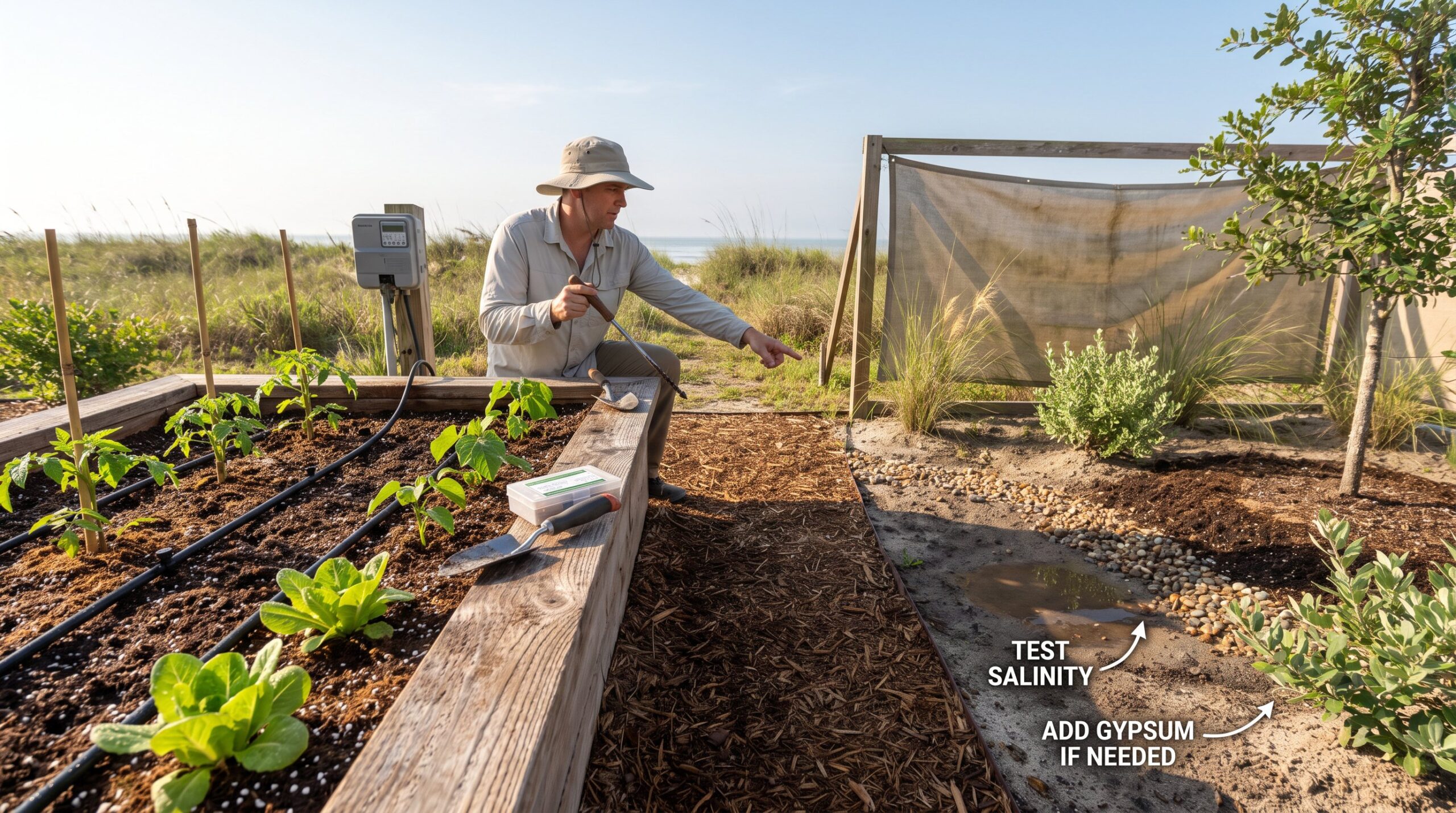
Warning: assume some salt exposure unless the site sits above natural dune lines. Test soil salinity and drainage before investing. A quick field test: dig a 30 cm hole, fill with water, and time how long it drains: if water sits more than a few hours, plan for raised or amended surfaces.
Raised Beds: Benefits, Trade-Offs And When They Shine
Fact: Raised beds give control, soil texture, depth, and elevation, so they often outperform in exposed coastal spots. Benefits include faster warm‑up in spring, better control of drainage, and the ability to place a fresh, low‑salt mix above contaminated or compacted native soil. They let gardeners tune a mix with compost and moisture‑holding materials to offset sand.
Trade-offs: raised beds cost more upfront for framing and quality media. They dry faster and typically need more frequent, measured irrigation. In 2024 a community garden on a barrier island found raised beds needed daily drip watering in midsummer while adjacent in‑ground plantings required water every 2–3 days once amended.
When they shine: choose raised beds for edible production near the shoreline, container‑style intensive plantings, or when native soil tests show high salinity or poor structure. For long‑term low maintenance in exposed sites, use rot‑resistant frames and design for easy replacement of media every 4–6 years.
Soil, Drainage And Salt Management In Raised Beds
Fact: Fill composition and elevation make raised beds resistant to coastal salt and poor textures. Use a mix of at least 40% screened compost, 30% loam or topsoil, and 20–30% moisture‑holding amendment such as coir: add perlite or sharp sand for drainage where needed. Elevate the bed surface 12–18 cm above the surrounding ground so roots sit above saline layers and road salts.
Practical detail: in a sandy coastal trial, adding 15% coir to a compost‑heavy mix increased available water by roughly 20% and reduced irrigation frequency by one day per week during summer. Install a coarse gravel layer under the bed only when the native soil compacts and stops draining: otherwise, free contact with native soil helps leach salts downward.
Irrigation tip: use drip tape and a timer with short, frequent cycles to keep salts from accumulating on foliage and to maintain steady root moisture. In very exposed gardens, add a windbreak and orient beds to minimize direct salt‑laden gusts. For regional context and broader coastal gardening techniques, the site offers a useful Gulf Coast gardening guide.
In-Ground Gardens: Benefits, Trade-Offs And When They Work Best
Fact: In‑ground gardens cost less and can hold moisture better once the soil is improved. They fit where native soil is deep, well‑drained, and low in salt. Benefits include lower initial cost, fewer media replacements, and better anchoring for deep‑rooted plants.
Trade-offs: in‑ground beds are vulnerable where water collects, where sand flushes nutrients quickly, or where salts persist. In a Gulf Coast neighborhood study, converted in‑ground beds that received 30 cm of compost over two seasons reached stable fertility but still required seasonal gypsum and leaching after storm surges.
When they work: choose in‑ground in sites with established vegetation indicating non‑saline, stable soil, or where budget and water are limited. Use in‑ground for wind‑tolerant ornamentals and for trees that need deep rooting. For vegetable plots inland from dunes, in‑ground beds often outperform raised beds because they retain moisture and building them costs less.
Soil Improvement And Salt Mitigation For In-Ground Beds
Fact: You can make in‑ground beds viable by adding organic matter, testing salinity, and leaching salts after intrusion. Add 1–2 inches (2.5–5 cm) of compost annually to increase buffering and structure. After saltwater flooding, leach the area with several inches of fresh water percolation to push salts out of the root zone.
Practical numbers: if sodium levels test high, apply gypsum at rates recommended by a soil test lab (often 1–2 kg per m² for heavily sodic soil) and work it in before heavy irrigation. Test drainage by digging a 30 cm hole and filling it: if the water remains after several hours, either regrade, install a subsurface drain, or raise the planting surface.
Site example: a volunteer planting crew repaired a low coastal bed by adding 10 cm of screened compost, installing a shallow French drain, and replanting with salt‑tolerant species: survivorship rose from 40% to 85% in one season. For hands‑on coastal projects and craft‑adjacent ideas that pair well with garden work, consult regional coastal craft ideas.
How To Choose Between Raised Beds And In-Ground Gardens (Site, Crop, Budget)
Answer: choose by testing site drainage, measuring salinity, matching crops to tolerance, and weighing budgetary limits. Steps: 1) Dig a 30 cm test hole and time drainage. 2) Send a soil sample for salinity and nutrient analysis. 3) Match crops: salt‑sensitive vegetables like beans and peas do better in raised beds near the shore: salt‑tolerant ornamentals and native grasses can thrive in ground beds inland.
Budget logic: raised beds cost more initially (lumber, media, irrigation) but can save time and yield in difficult soils. If water is scarce, in‑ground beds that retain moisture after amendment may be cheaper long term. If frequent storms threaten salt surges, prioritize beds that can be rapidly repaired or replaced.
Practical rule of thumb: if a site is waterlogged more than a few hours after heavy rain, or soil tests show elevated salts, favor raised beds. If the site drains within an hour and salinity is low, in‑ground gardening will usually save money and labor. For related gardening how‑tos about growing in sandy soil and handling salt, reference a local guide on soil and salt coastal.
Conclusion
Insight: in coastal climates, raised beds are the conservative default near shoreline exposures because they isolate roots from salt and poor textures. In‑ground gardens remain the smart choice where elevation, drainage, and salinity are already favorable or when budgets constrain choices. Gardeners should test, match crops to tolerance, and plan irrigation with salt management in mind. Practical investments, soil tests, compost, and smart irrigation, deliver the biggest returns, whether planting above or in native ground.