Table of Contents
ToggleCoastal gardens face two brutal forces: salt spray that scorches leaves and strong winds that snap stems. How to protect a garden from salt spray and strong winds starts with placement, plant choice, and barriers designed to reduce wind velocity without trapping turbulence. This guide gives clear, practical steps for layouts, windbreaks, soil care, and shields so coastal gardeners can keep plants healthy through storms and salt events.
Key Takeaways
- Protecting a garden from salt spray and strong winds starts with a strategic layout placing salt-tolerant plants on the windward edge and more sensitive plants deeper in the garden.
- Effective windbreaks should be porous with 40–60% porosity and extend beyond the garden area to reduce wind speed without causing turbulence.
- Select salt-tolerant and wind-resilient plants with waxy or hairy leaves, flexible stems, and strong root systems to withstand coastal conditions.
- Improve soil health by adding organic matter and using mulch or groundcovers to reduce salt concentration at the root zone and prevent salt damage.
- Practice deep, infrequent irrigation with drip or soaker systems to leach salts below roots and protect plants during establishment.
- Use temporary covers during storms and permanent porous barriers combined with live hedges to shield plants from daily salt spray and wind damage.
Smart Garden Layout And Windbreak Design
Place the most exposed, salt-tolerant plants on the windward edge and sensitive plants deeper inside the garden. This simple layout reduces salt exposure and gives tender species a chance to thrive.
Why it works: salt spray drops and abrasive particles lose energy as they pass through vegetation or porous structures. Effective windbreaks are longer than the protected area and extend beyond the garden footprint, creating shelter downwind for roughly 8–10 times the barrier height. Use that rule when planning rows or fences.
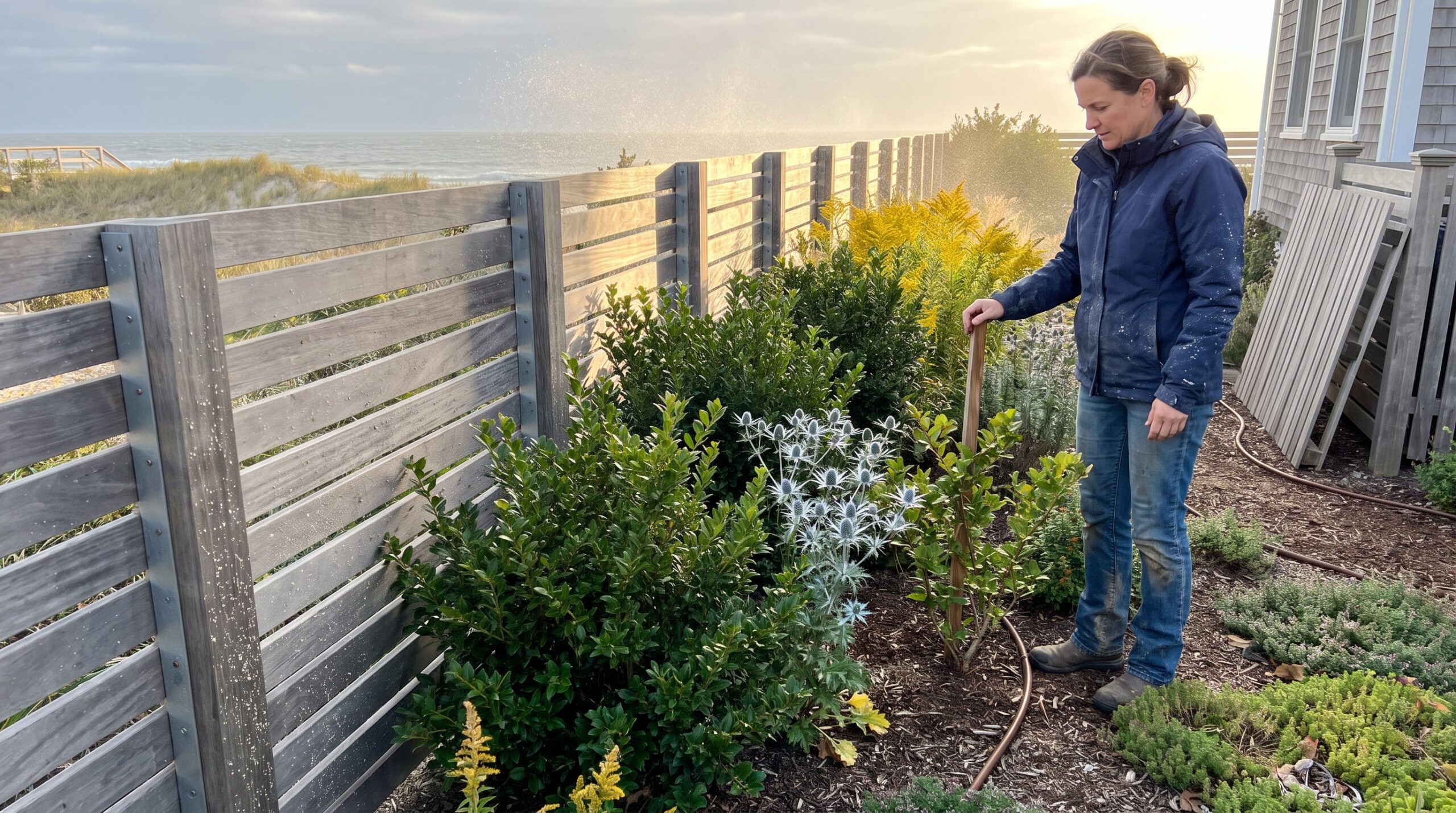
Design details that matter: choose porous barriers with 40–60% porosity rather than solid walls. Porosity that filters wind reduces speed while limiting dangerous eddies and turbulence. Slatted fences, lattice screens, or staggered hedgerows produce that filtering effect. Place the first barrier at a distance equal to 1–2 times its height from the area needing protection to allow wind to decelerate gradually.
Practical placement tip: map prevailing winds and salt-exposure zones before planting. Place utility paths, tool storage, or tougher shrubs on the most exposed edge to act as sacrificial buffers. Gardeners who want a fuller coastal primer will find useful regional guidance in the site’s overview of Gulf Coast crafts and gardening, which also covers exposure mapping and local plant lists in more depth: regional gardening primer.
Choose Salt-Tolerant And Wind-Resilient Plants
Fact: Pick plants with waxy or hairy leaves, flexible stems, and strong root systems to survive salt spray and wind.
Plant features to prioritize: 1) waxy or hairy leaf surfaces that shed salt, 2) flexible stems that bend rather than snap, and 3) deep or fibrous roots that anchor plants in sandy soils. Concrete coastal-tolerant species used by many gardeners include sea holly, thrift, seaside goldenrod, beach elder, erigeron, and Crambe maritima. For shrubs and trees, consider wax myrtle and yaupon holly.
Placement strategy: place sacrificial buffer plantings on the windward edge, plants that tolerate repeated salt scouring and can be replaced if necessary. Behind those, set success tiers: tough perennials, then less tolerant ornamentals closer to the house or other shelter.
Practical warning: even salt-tolerant plants need time to establish. Water deeply during establishment and avoid fertilizing heavily: excess salts plus rich fertilizer can stress roots. For advice on growing in sandy, salty soils and when to use raised beds, consult the site’s practical guide on coastal vegetable planting that explains amended soils and salt-tolerance specifics: coastal planting tips.
Soil Health, Mulch And Irrigation Techniques To Buffer Salt Damage
Core insight: healthy soil and correct mulching reduce salt concentration at the rootzone and keep plants vigorous.
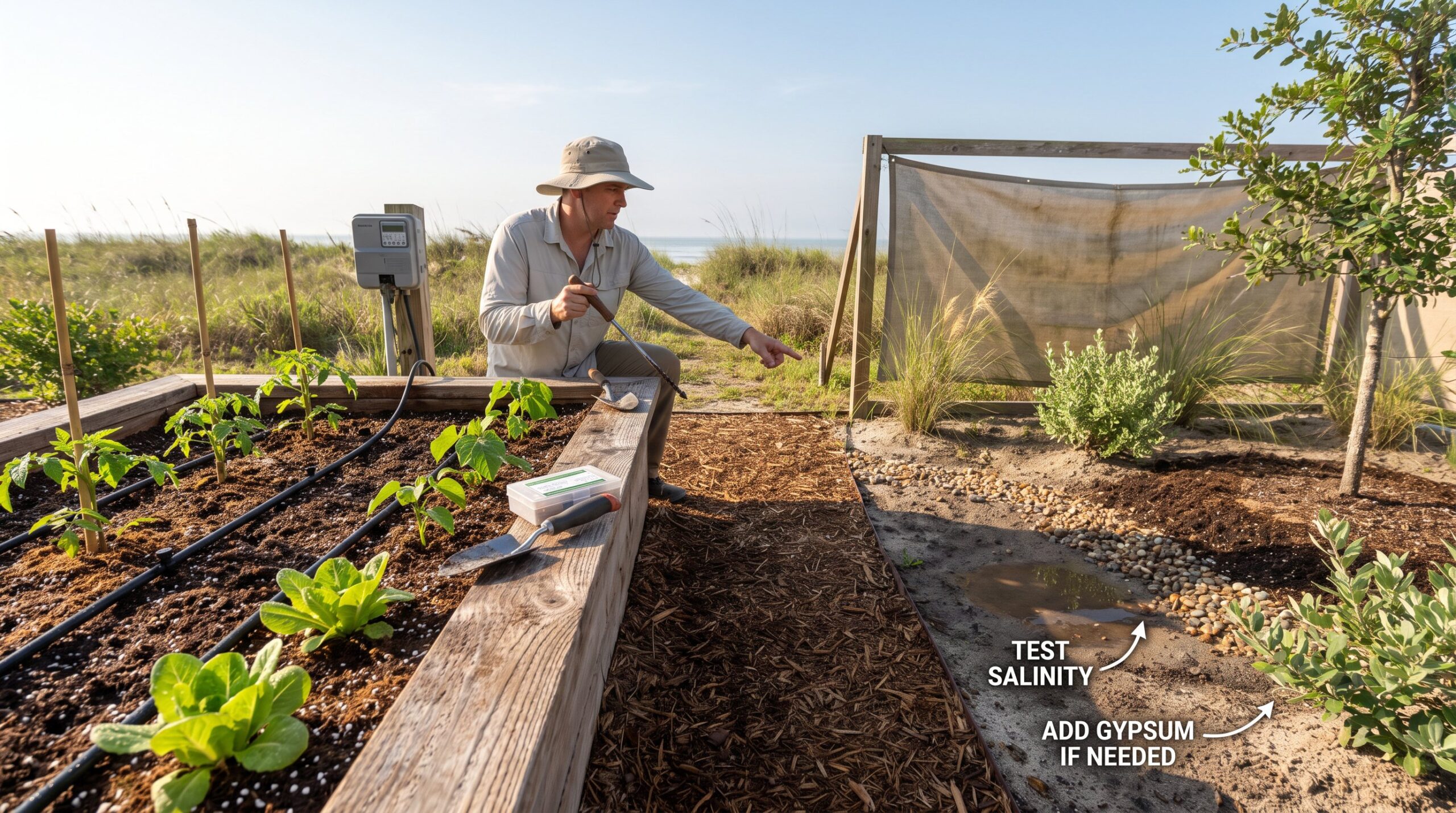
Soil steps that count: add organic matter to increase water retention and microbial activity, which helps flush salts down through the profile. On very sandy sites, incorporate compost or coconut coir to reduce leaching and encourage root growth. Use raised beds for sensitive plants: raised soil allows better control of amendments and drainage, this is especially useful in gulf conditions where salt and sand mix.
Mulch and groundcover: cover bare soil with 2–4 inches of organic mulch, gravel, or low groundcovers to reduce evaporation and erosion. Mulch slows salt deposits from wind-driven spray and prevents salts from crystallizing at the surface. Groundcovers like creeping thyme or hardy sedums also trap blowing sand and reduce abrasion.
Irrigation practices: water deeply but infrequently to leach salts below roots. During establishment, water more often, young roots need help to outrun surface salt. Use drip irrigation or soaker hoses to avoid wetting foliage, which can concentrate salts on leaves when water evaporates. For decisions between raised beds and in-ground, see the site’s comparative guide on bed types for coastal climates: bed comparison.
Temporary And Permanent Physical Shields For Vulnerable Plants
Immediate fact: temporary covers protect plants during storms: permanent shields reduce daily salt exposure. Use both depending on risk.
Temporary options: move potted plants into sheltered spots, use floating row covers for vegetables, or erect quick slatted screens around young transplants when a storm warning arrives. These quick fixes saved one gardener’s heirloom peppers during a sudden spring gale, covers reduced leaf burn and the plants rebounded in two weeks.
Permanent options: install slatted fences, lattice, or staged plantings as long-term defenses. Screens with roughly 40–60% openness minimize turbulence and cut wind speed while letting some airflow through. Combine structural screens with living layers for better aesthetics and ecological benefits.
Practical hardware tip: use strong garden stakes and tie points for tall perennials and climbers to prevent snapping. Lightweight plants benefit from staking that allows some sway: rigid restraint causes breakage. For simple gear like stakes and ties, consult the site’s how-to page on garden supports for specific product ideas and sizing: support suggestions.
Conclusion: Prioritizing Resilience — A Seasonal Checklist For Coastal Gardens
Takeaway: prioritize resilience by mapping exposure, selecting tolerant plants, improving soil, and layering shelter that combines porous structures with living hedges.
Seasonal checklist (actionable):
- Assess wind and salt exposure before planting.
- Establish or repair windbreaks before peak storm seasons.
- Plant in milder seasons and water deeply during establishment.
- Re-mulch, inspect for salt burn, and replace failed shelter plants regularly.
A final honest note: coastal gardening mixes triumphs with setbacks, expect to replace some sacrificial plants. Thoughtful layout and steady maintenance reward gardeners with durable, salt-smart gardens that flourish year after year.