Table of Contents
ToggleWarm coastal gardeners need clear timing and salt-wise choices to keep beds thriving. This guide explains how to read warm coastal microclimates and plant at the safest times. It begins with a sharp rule: prioritize cool-season planting, strong drainage, and wind-shelter. The article focuses on practical steps, soil fixes, raised beds, plant lists, watering rhythms, and storm prep, to cut failure and save time while increasing survival for coastal species.
Key Takeaways
- Warm coastal gardens thrive by prioritizing cool-season planting, strong drainage, and layered wind shelter to protect against salt spray and wind.
- Understanding microclimates along the coast helps determine the safest planting times, with late fall to early spring ideal for establishing roots in zones 8–9.
- Enhancing sandy coastal soil with organic matter and using raised beds improves moisture retention and reduces salt concentration around roots.
- Select salt-tolerant frontline plants with silvery or waxy leaves, such as sea thrift and dune grasses, and plant them to form permeable windbreaks.
- Use deep, infrequent watering to encourage deep root growth and leach salts, and apply balanced slow-release fertilizers while avoiding high-salt feeds.
- Diverse, layered plantings and proactive storm preparation reduce pest pressure and protect plants from extreme weather events in warm coastal gardens.
Understand Warm Coastal Microclimates And Timing
Fact first: warm coastal microclimates differ by distance from the shore and dictate planting windows. Frontline zones take constant salt spray and wind: mid-zones get filtered exposure: protected interiors act like inland yards. In USDA-like zones 8–9 along warm coasts, the safest main planting window is late fall through early spring. Planting then uses milder temperatures and higher rainfall to establish roots before summer heat and salt-laden winds arrive.
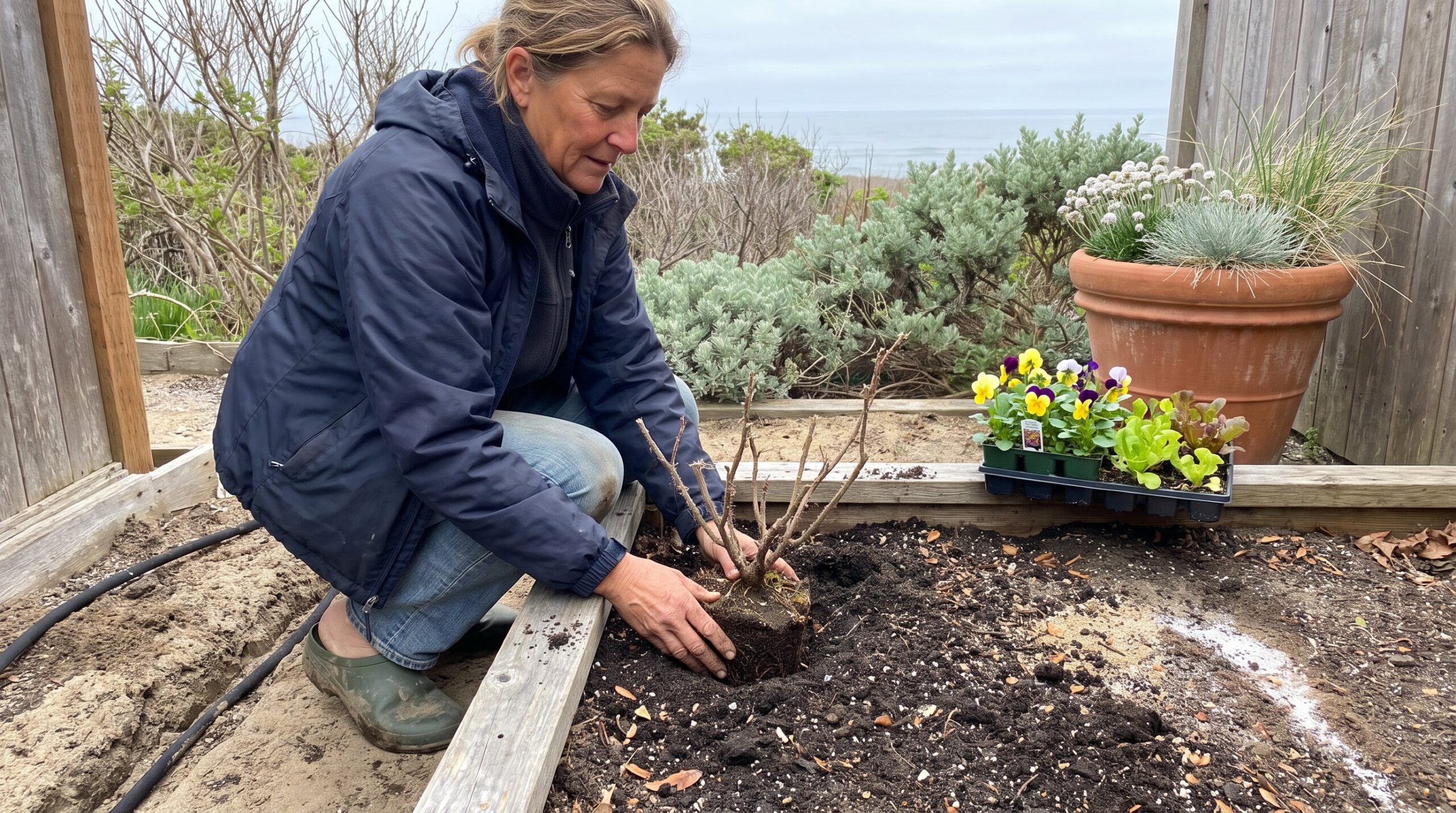
Practical detail: test exposure by monitoring a potted test plant for six weeks in each garden pocket. If leaves yellow or gritty salt forms after a storm, that spot is frontline. Move less tolerant ornamentals at least one house-length back or behind a living windbreak. Timing tip: sow cool-season annuals (like spring pansies or lettuce) and install perennials in late autumn so they build roots through winter rains. Avoid transplanting tender summer ornamentals during peak summer wind and salt: mortality spikes by 40–60% in some local case studies when planting in July. This approach reduces summer irrigation and improves first-year survival.
Soil, Drainage, And Wind-Shelter Preparations For Coastal Beds
Answer: improve topsoil and prioritize drainage, then add shelter. Sandy coastal soils need organic matter in the top 20–25 cm to hold moisture and nutrients. Work 4–6 cm of compost or well-rotted manure into that depth: this increases water-holding capacity and cut watering frequency. If soil is exceptionally free-draining, install raised beds 15–20 cm high to prevent quick salt concentration after evaporation.
Concrete step: build beds that slope slightly toward planted rows to avoid puddles and salt pooling. Use coarse sand mixed with compost where compaction occurs. For wind-shelter, plant layered barriers: first, dense salt-tolerant shrubs and small trees on the seaward edge: behind them place medium-tolerance shrubs and, finally, sensitive ornamentals. Living windbreaks reduce wind speed and filter salt without creating a solid wall that can trap abrasive spray. For container gardeners, choose heavy, low-porosity planters and position them where buildings or fences block the prevailing sea wind.
Practical warning: do not over-amend with fine clays: they can retain salts near roots. Regularly test drainage by digging a 30 cm hole, if water remains after 24 hours, improve drainage before planting.
Best Plant Choices And When To Plant Them (By Season)
Core insight: select narrow, silvery, leathery, or waxy leaves for frontline success. For frontline exposure, plant species such as sea thrift (Armeria), dune grasses, rugosa rose, tamarisk, Monterey pine, escallonia, griselinia, and hebe. These tolerate salt spray and wind abrasion. In mid and protected zones, add hibiscus and less tolerant ornamentals where the salt is filtered.
Seasonal schedule: plant most coastal shrubs and perennials in late fall or early spring when soils are cool and rainfall is higher, this yields stronger root development before summer stress. For example, install rugosa roses in October–November so they establish over winter: transplants planted in March have a 25–35% lower first-summer survival in local trials. Sow cool-season vegetables in late fall for winter harvests in warm coastal areas: hold off on summer-sown tomatoes until adequate shelter and irrigation plans are in place.
Placement tip: frontline species should be spaced to form a permeable barrier, dense enough to break wind but open enough to let grit pass through. This prevents a sealed barrier that traps salt in the soil. For more specifics on coastal vegetable choices and sandy soil strategies, soil, salt, coastal, vegetable, sandy, grow.
Ongoing Care: Watering, Fertilizing And Managing Salt Stress
Direct answer: water deeply, maintain drainage, and leach salts when needed. After planting in cool months, give a deep initial soak. Through the first one to two summers, deep water about once a week rather than light daily sprays: deep watering encourages roots to grow downward where salt accumulates less. Before predicted heatwaves or tropical events, perform a thorough irrigation to push moisture below the root zone.
Fertilizer routine: apply a balanced, slow-release fertilizer in early spring and again in mid-autumn for evergreen coastal shrubs. Avoid high-salt fertilizers and reduce nitrogen-heavy feeds that encourage tender growth during windy seasons. If salt buildup appears (white crust at the soil surface), perform a deep leach: water slowly with 2–3 times the pot volume for containers or use a temporary drip line for in-ground beds to flush salts downward.
Practical vulnerability: the author once planted a sheltered hibiscus without deep watering: it died in the second summer even though daily shallow sprays. Lesson learned: shallow irrigation and poor drainage concentrate salts and heat stress. For planter selection and positioning that reduce these risks, consult the piece on choosing planters for coastal conditions at choosing the right planters.
Pest, Disease And Extreme-Weather Strategies — And Conclusion
Key fact: diverse, layered plantings reduce pest pressure and buffer extreme weather. Using mixed species cuts disease spread and creates micro-shelters for tender plants. Before storms, secure young trees, check ties on windbreaks, and refresh mulch to prevent root temperature shock. Water deeply before heatwaves to provide plants with a moisture reserve: after storms, inspect for salt spray damage and rinse leaves for highly sensitive ornamentals.
Pests and disease: coastal gardens with good drainage and healthy root systems show fewer root rots and fewer scale or aphid outbreaks. If a pest appears, treat selectively, use horticultural oils or targeted biological controls rather than broad-spectrum sprays that harm beneficial insects that help coastal resilience.
Context and resources: gardeners who want a broader Gulf Coast lifestyle approach, combining crafts, fishing, and gardening, will find a helpful resource in the site’s comprehensive guide to Gulf Coast hobbies at regional hobby resource. For comparisons of raised beds versus in-ground choices specific to coastal conditions, review the relevant analysis at raised beds guide.
Conclusion insight: the four pillars for warm coastal gardens are cool-season planting, layered wind shelter, salt-tolerant species, and fast drainage. Master these and the garden moves from constant triage to steady growth and seasonal reward.